

Onboarding in the context of immersive work usually refers to the part of the audience journey that takes people from their arrival at the location to them being in the world of the show. This is often a briefing given by either staff and/or someone in character. What I’d like to do here is zoom out and consider the entire audience journey from normal life into the world of the show and back again. I find it useful to think of this as a Hero’s journey, with all three acts and 12 steps and the show itself existing in act two. Thinking through this journey can be integral to the world building process itself.
The audience begins their adventure in ‘The Ordinary World’. This is where we think about who they are, what their lives a like, how they are feeling, and what is important to them. This gives us a beginning for the emotional arc we want our audience to go on. If it is helpful we can also borrow from innovation thinking and phrase our show in terms of addressing a need, in this case the need for emotional transformation. Our goals might be taking them from bored to amused, or from despairing to hopeful, or anything in between. What is the status quo for your audience and what about it do you want to disrupt?
The ‘Call to Adventure’ is our advertising. Here can imagine our promotion not as a chore to get people to our show, but as part of the creative storytelling process. How is the world of the show introduced? What is the story around the story? Sometimes we will want to be outside of our story, talking about the creators and their intentions, while at other times we may want to extend the reality of the world into our marketing and approach it like an augmented reality game. If marketing and advertising bores you, you’re missing an opportunity. We can imagine our audience as protagonists who need a change, who need their world disrupted. Where are they at emotionally and what will be their call to action? The storytelling begins at this first point of contact. For Alt-AR we invented the All World Citizens Science Group, a small club of ordinary citizens pushing the boundaries of science to make contact with aliens through a daring mix of virtual reality and quantum entanglement. It was the AWCSG doing to the promotion for the show, not a group theatre makers. We had fun sharing their character profiles and creating promotional material full of over the top techno optimism.

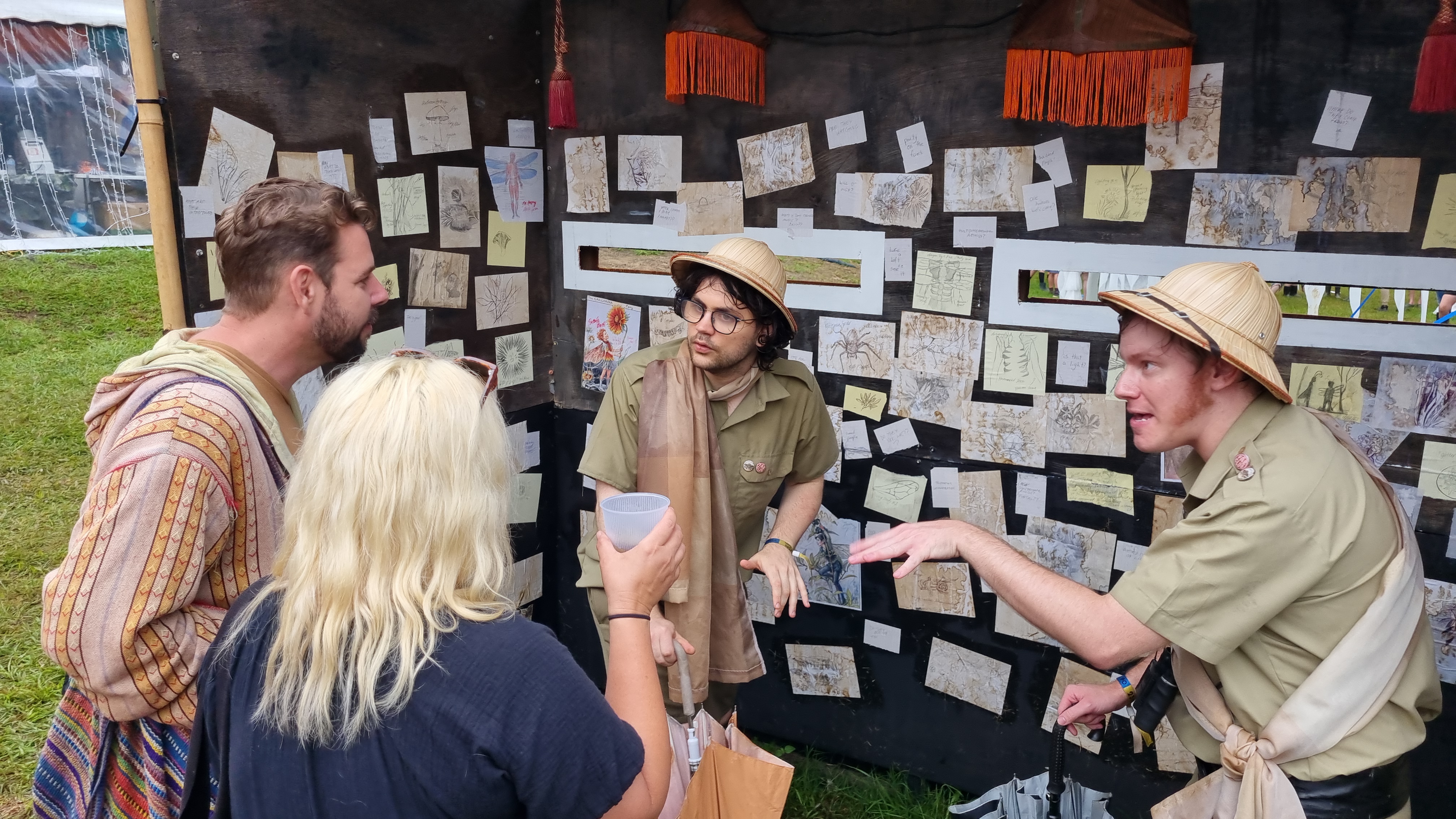
For the Fae embassy I was asked to create an experience for early teen audiences attending the Woodford Folk Festival. In talking with my niece, who was 13 at the time she told me she wasn’t interested in protesting for the environment any more as she didn’t think it did any good. She had given up fighting for change at 13. I remembered feeling this way in my twenties after the 2002 Stop the War march failed to prevent the Iraq war. This shared experience had a real emotional impact on me and helped me to conceive of the show and the emotional journey from despair to hope that I wanted for the audience.
As we think about the core emotional change we want for our audience we can also consider a much earlier kind of onboarding. How to on board the funders, cast, and crew that will all enable the show to happen in the first place. For The Fae Embassy it firstly had to motivate me, then the client and Festivals Australia to all be ‘on board’ with the project. I needed to convince a crew of professionals and 60 volunteers to get ‘on board’ to make the show happen. This deserves it’s own essay, but for now remember that what works for you, has to work for them, and ultimately for your audience as well. You may wish to consider thinking about your own hero journey through a project as well as for all your stakeholders.
The logistics of promotion, ticket purchasing, travel to location, and arrival may all have limited opportunities for world building and onboarding. I place this stage as ‘Refusal of the Call’ in our hero journey, as our audience needs to overcome some difficulties here to actually decide to attend. Wherever possible I encourage you to start building the world in the mind of your audience and to have fun with it. One thing to be careful about when bringing logistics in world is to make sure you don’t confuse anyone. During our on site induction at the Area One escape rooms we treat our guests as temporary contractors hired to help our lab solve some problems. This idea has been introduced in the description of the show during their booking. If everyone on the booking hasn’t paid yet we explain during their briefing that while we are paying them well as contractors, they do have to cover their own insurance and due to the nature of the work this costs more than what we are paying them and they need to make up the difference. This in world way of explaining why they have to finish paying for their tickets is an obvious joke in the context of the briefing, but it would be confusing at the time of booking on the website.
Wherever possible, I try to think about onboarding as I’m doing world creation. The way in which a fantasy world is connected to the real world can be part of the excitement and appeal of the world. The wish fulfillment gained by entering into and participating in a fantasy world is also about the way in which we might get there and return. Asking what might exist around the world can be helpful in creating the in-between fantasy that forms the bridge. For The Fae Embassy we imagined groups of humans that study the Fae known as Faleontologists, who have societies, some secret, some not so much. These characters act as a bridge between our world and the world of the Fae. Their approach-ability and readiness to explain how to interact with the Fae allowed us to make the Fae much more aloof and otherworldly. To keep with our hero journey this step is ‘Meeting the Mentor’.

For ‘The Game’ we created a world that was self aware as a game world. Characters knew they were in a game and they had arrived in our world to be played. This world was full of puns and parody and set a tone of the ridiculous that played with cliche and tropes from Sci-fi and fantasy genres. We wanted to be accessible and to play with what people knew. Our onboarding device was a deck of playing cards with game characters as the royal cards. This premise also allowed us to have “Game Central’ characters, immortal bureaucrats who lived to administer game worlds. With these characters we were able to have multiple levels of engagement including game citizenship and branching narrative adventures.
Once an audience arrives at your location they are ‘Crossing the Threshold’. This is the step most people think about as ‘onboarding’ as we have distinct rules and expectations and this is the actual point where we physically cross from normal to special. While we have a lot of housekeeping to do we should remember that crossing the threshold into our special world is also an emotional experience, we need to cover a certain amount of logistics and safety information, but we should also be setting up our audience for how they should feel going in. Do we want to generate excitement, fear, awe, caution? Once in the experience they should have enough context, information, and story for them to participate in the way we want them to. This doesn’t mean onboarding is over. Many immersive experiences like to add additional layers of involvement, these require their own onboarding. If we go deeper into the world and ask more of our audience those steps all need consideration. The more we have established the easier the steps should become, onboarding at this stage can be as simple as an outstretched hand.

On our hero journey for the audience we now have ‘Tests, Allies, Enemies,’ ‘The Approach’, and ‘The Ordeal.’ This all act two and is the guts of the show. I won’t go into detail here as I’m focusing on our way into and out of the show. I generally think of these steps as being exploration and learning, where we meet the characters and explore the environment, once our audience knows the way around they go deeper, ‘the approach’ is where they start to put it all together and understand what is happening in this world and how we are moving inevitably toward the crisis. In The Ordeal we reach our dramatic conclusion. If we have given agency to our audience this is where it plays out, if we want them to make a key decision this is it.
Let’s assume we’ve done all those bits wonderfully and we reach the dramatic conclusion of our performance. In a cinema or theatre experience the lights come up and everyone walks out. For an immersive show this could kill the experience, even if its what we might expect. If we have stepped into a world we want to step delicately out, maintaining the world at each point. The more care we give this stage the better the memory and the emotion that will be preserved. If someone has had an emotional experience in a world of your creating, they will have associated a feeling with that environment. Keeping that world intact for an audience honours everything you have just achieved and maintains the integrity of that experience.
Before we start ‘The Road Back’, let’s consider the ‘Reward’ stage of our hero journey. If we have asked some agency of our audience we should reward it. This might be a physical token in a gamified experience, an effect on the narrative or it may simply be a kind word from a character. If we have made them part of our world we should acknowledge them and make sure they feel seen by that world. If the story ends and we exit without some recognition we may end up feeling like our agency was a gimmick. For the finale of The Game we had a tournament which had a winner, but we also made efforts to include the improvised story lines and contributions of players throughout the experience. We responded to their creativity and made it part of the world, acknowledging them and their efforts with a narrative reward. We also gave the winner a season ticket to the next festival.
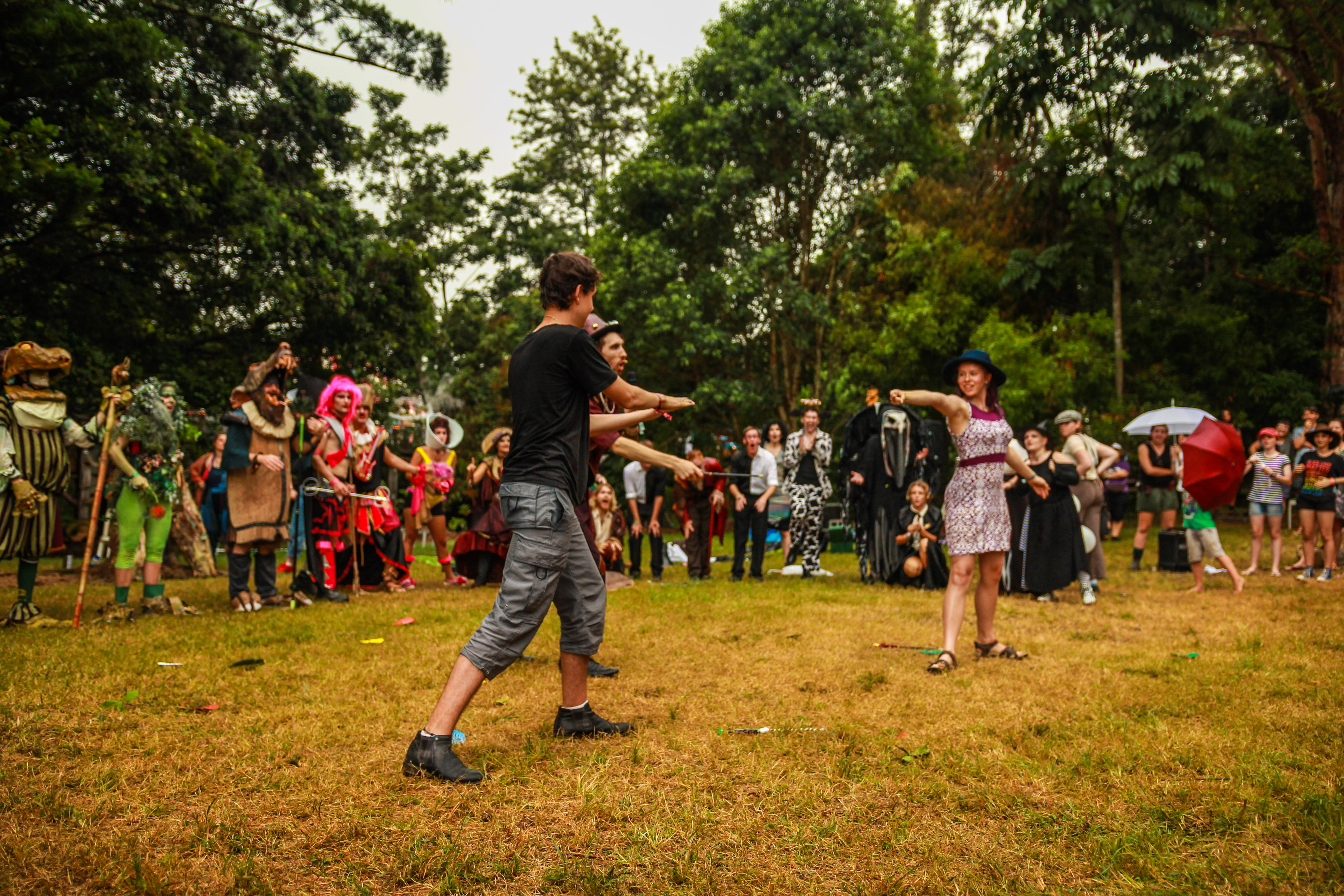
For ‘The Road Back’ we should asked ourselves: Where is our audience emotionally? What have we changed about them individually and also as a group? While our story might be over the emotional journey for our audience isn’t. They still need to return home and integrate their experience into normal life. Our in between spaces on the way out allow for decompression and care, which is particularly important if you have brought your audience to a vulnerable emotional state. The story world should ideally remain intact and we should have a good reason for the characters and our audience to part ways.
The next step for our hero journey is ‘Resurrection’. In the context of a story this is the climax where our protagonist has their big emotional transformation, but here our audience is leaving the show and going home. What happens at this point is actually crucial to the emotional journey of our audience, if we want them to actually transform we need to pay attention to this step. This is where the audience either dismisses the experience or integrates it into their lives. It may not be something we have control over, in which case the work all needs to be done earlier, ensuring we had scenes that would haunt the imaginations of our audience and we have given them ways to think and talk to each other about the experience that would help this process. We do have a few other options.
While our audience is still physically present, but the experience has ended we have two obvious commercial add-ons. The bar and the gift shop. While these might be there for commercial reasons they both have the opportunity to extend the experience into normal life and offer some opportunities for emotional integration. If they do not do this they will likely feel parasitic or at very least disconnected. The bar might be able to encourage conversations between audience members, having shared an experience together they may be less inhibited and more inclined to connect, which might be part of the transformation you were hoping for. If you wanted to bring your audience more into the present, there’s nothing quite like a good dance. The gift shop might offer take home experiences or if the show had an environmental or social justice theme it may offer opportunities to donate to a cause.
If we began our journey with an augmented reality experience we could now extend the experience after the show in the same way. There might be access to additional content or further communication from characters within the show. Be careful here about how much work you create, ongoing worlds take up a lot of time even if they are a super fun idea. Whatever we do post show we are supporting the change we want to see in our audience, if they are going to change their behaviour this step will happen after the show. This climax happens not when they are with us, it is something they have to do by themselves in order for it to count. Often we leave them to it, but it’s worth thinking how we can support that extra step.
We often have no idea whether we have had any lasting impact on people’s lives and after many years of making work this can be difficult emotionally. If you have experienced a work of art that made a real impact on your life, please let that creator know, it can make a world of difference to them. Encouraging reviews can help and that can be easy for more permanent work like an escape room. For a temporary work we need to follow up with surveys if we hope to gather these stories and learn what impact we’ve had. For ‘A Village Called…’ we taught kids how to use power tools and gave them pallets and timber to make their own village. This project happened over several years so we were able to gather some stories about the longer term impact of the project from families who returned. The story of one 10 year old girl who gained a confidence from their making skills that transformed not only their creativity, but also their social confidence has stuck with me ever since. These anecdotes are precious for your own emotional journey, we’re in this for our emotional transformation as well so don’t forget to look after your own emotional needs and gather the feel good stories and hold them close to your heart.
It’s not over yet! Having made their emotional transformation our audience still need to ‘Return with Elixir’. They have to talk to other people about what just happened and share the value of their experience. These stories circle all the way back to the start and become the onboarding for our next audience. Imagining what these stories might be, how they sound, and what the benefits of sharing them are can be integrated into our creative process. There may be other forms of value that spread out from your show as well depending on the change you are wanting in your audience.
For ‘The Game’ we had far more content than anyone could experience during the show. Yes, this was overproducing, but what it did was ensure that participants sharing stories about their adventures was a crucial part of playing and gave each player something special. This helped players to continue their bond beyond the game experience, allowing their connection to continue with the sharing of their unique stories form their adventures. These stories can also be imagined as ripples, if the retelling of someone’s experience can bring a little of your emotional arc out beyond the show, all the better. When it’s all over this is what will remain, so it’s worth making these stories the best they can be.
Here is an excel spreadsheet of the audience journey as hero’s journey that could be helpful as a thinking tool. If you want to learn more about the Hero’s Journey then The Writers Journey by Christopher Vogler is the go to book, if you’re super keen then The Hero with a Thousand Faces by Joseph Campbell is the original work. There have been many more books and critiques of this story structure., I would say to use it where it’s useful, if it’s not use it to clarify what is.
 Tim Monley